SEO
Two genuinely different jobs that get sold under one word. Both matter, they fail in different ways, and neither of them can be guaranteed by anyone.
Before anything else, the thing most SEO pages won’t say: nobody can guarantee you a ranking. Google’s own guidance on hiring an SEO lists a guaranteed number-one position as a reason to walk away, alongside link schemes and anyone claiming a special relationship with Google. We don’t do any of that, and we’d rather lose the enquiry than pretend otherwise.
What can be done is structural, and it splits cleanly in two. On-page is what a search engine reads: your content, headings, metadata, internal links, and whether your pages actually match the places and terms you serve. Technical is whether it can read them at all: crawlability, indexing, redirects, structured data, mobile rendering and Core Web Vitals. A perfect page nobody can crawl ranks nowhere; a fast, flawlessly crawlable page about nothing ranks nowhere either.
Fit
When this is the right job — and when it isn’t
We’d rather lose a project at this stage than sell you one you don’t need. The right-hand column is the honest half.
- You serve several areas but only appear in searches for one of them
- Your pages are being crawled but not indexed, or indexed and not shown
- The site is slow on mobile and failing Core Web Vitals
- A site migration lost you visibility and nobody redirected the old URLs
- Your Google Business Profile and your website disagree about basic facts
- You want a guaranteed position, a guaranteed timeline, or a set number of backlinks a month. We don’t sell any of those and you should be wary of anyone who does
- Your business has more enquiries than it can serve. More visibility isn’t the constraint
- You’ve been told you need to publish forty articles a month. That’s the kind of scaled content Google’s spam policies exist to catch
Scope
What’s included
On-page: content & structure
Pages organised around the places and services you genuinely offer, with headings, metadata and internal links that describe them accurately rather than stuffing terms.
Technical: crawl & index
Robots and sitemap correctness, canonical tags where near-duplicates exist, proper 301s on anything that moves, and no page accidentally blocked from the index.
Structured data
Valid schema for the things you actually are — a local business, a service, an article — rather than markup piled on in the hope it does something.
Core Web Vitals
Real measurement on throttled mobile, then fixing what the numbers point at, rather than chasing a score for its own sake.
Related work
Where this shows up in the portfolio

The Driving Spot
Dedicated local structure for every town the school teaches in, rather than one catch-all homepage.
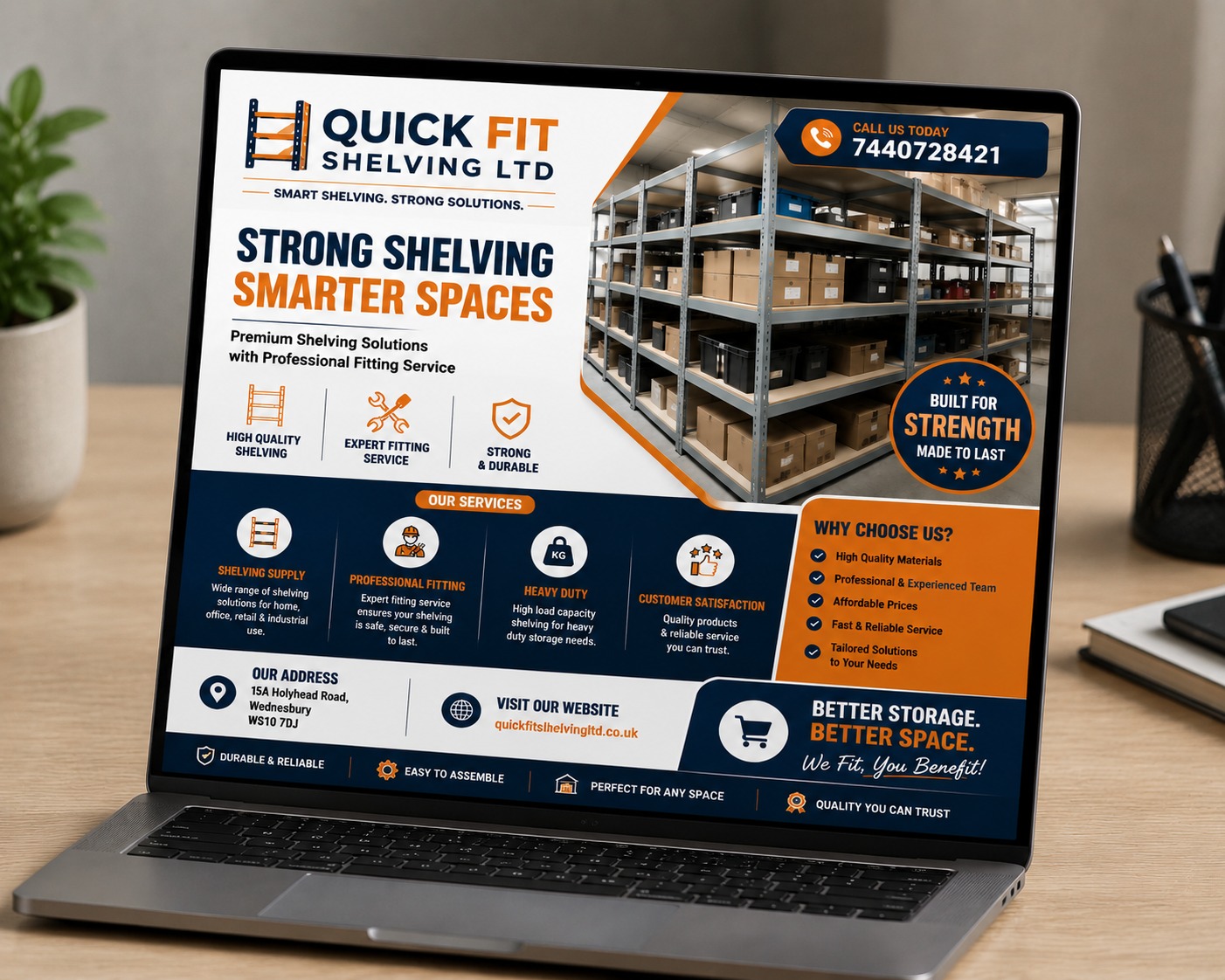
Quick Fit Shelving
Services, coverage and contact front and centre for buyers who decide fast.
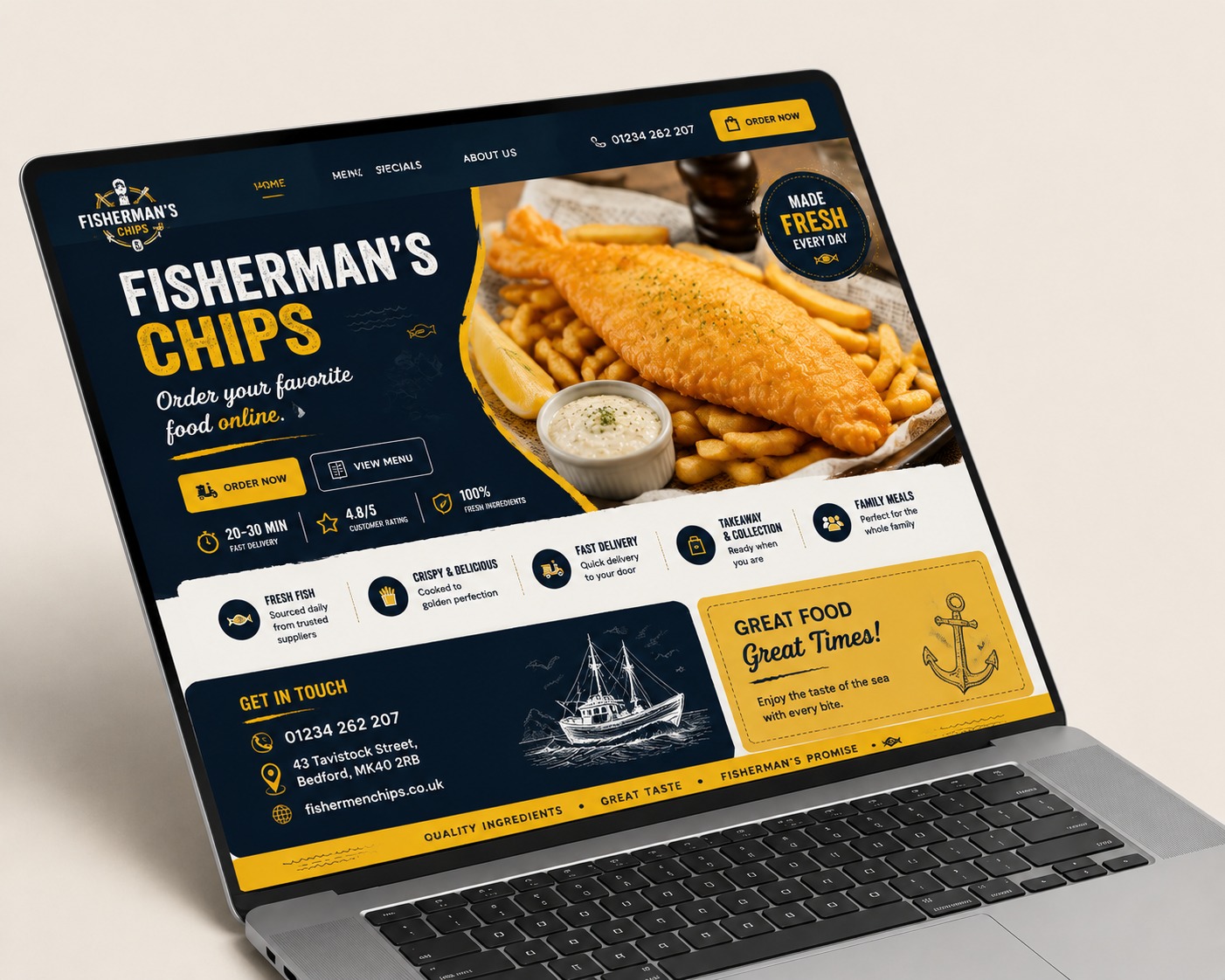
Fisherman’s Chips
A menu-first site with online ordering, built for speed during service.
Questions
Straight answers
Can you guarantee we’ll rank first?
No, and you should treat anyone who says otherwise as a warning sign — that’s Google’s own advice, not just ours.
We can build the structure that makes ranking possible and be straight with you about what we changed and why. The ranking itself isn’t anyone’s to sell.
How long until it works?
We won’t give you a date. New and changed pages have to be crawled and indexed before they can rank, and Google publishes no timeline for that. Anyone quoting you a week or a month is guessing at a number that isn’t theirs.
Do you build backlinks?
No. Link schemes are a link spam policy violation and can get a site penalised. What we do instead is make the site worth linking to and make sure nothing technical is stopping it from being found.
What’s the difference between on-page and technical SEO?
On-page is what a search engine reads once it reaches a page: content, headings, metadata, internal linking. Technical is whether it can reach and understand the page in the first place: crawling, indexing, redirects, structured data, speed and mobile rendering.
They fail independently, which is why we do both rather than selling them separately.